InTheRough - Chillin' Me Softly by Alex Young


image.jpg

Here is to warm beautiful weather, turning up, making money, and romance aka Summer 2015. "Chillin' Me Softy" is a playlist by InTheRough that captures the aforementioned themes. The collection draws upon tunes enjoyed throughout the staff's time at university in South Carolina and Washington, D.C., noticeable with trap influences from nearby Atlanta and more diverse sounds from the likes of 3LAU and Flatbush Zombies. A long-awaited return to native Pittsburgh, PA sparked the addition of Wiz and Mac. ITR aims to provide an arrangement of music that is cohesive as it flows from vibe to vibe, beginning and ending with Chance The Rapper, where is SURF, Chance? Enjoy "Chillin' Me Softly" below and explore SC for more tunes curated by InTheRough.

Kanye West Changes Album Name by Alex Young

Monday brings important music related news via Kanye West. The self-proclaimed genius is changing the name of his forthcoming album So Help Me God, to SWISH, he announced the news yesterday from his Twitter account. You may remember 'Ye got "Swish" trending back on March 16 when he tweeted consecutive nude photos of his wife Kim, it is also heard in "All Day" . He may even change the name again according to his most recent tweet, but for now SWISH it is. The album could release any day now, stay tuned.

C//C for ITR: London Vibes by Maxwell Young

image.jpg

Wrapping up our conversation with Cautious Clay, we get a glimpse of what life was like across the pond and how his study abroad experience turned out to be just as much music-driven as it was academically-driven.  If anything, let his story be a testament to the power of people and connections, as emails via SoundCloud culminated in a student from D.C. being featured on several projects from emerging English artists. 


MY: You spent a lot of time in London.  What was that like?

JK: Yea, it was incredible.  I didn’t want to leave.  It was crazy because I was there for study abroad and I went with the intention of doing some music.  From the beginning I was like, ‘I’m gonna do some music, this is fucking London, I’m gonna do this shit.  I did it in D.C., why not do it in London,’ you know? So, I found a group of people at my university who were chill and then I started going on SoundCloud, finding cool producers, and emailing them.  A couple hit.  MNEK and Flako had me come over for a session and from there it was just a really inspirational city.  Not only the music scene, but also the people and the environment.

MY: What are the cultural differences in the urban environment?

JK: I think the people are a lot more open to the artistic side of things.  They’re more accepting of the artistic side of music than the US.  They have a higher threshold for hearing things that are just good.  They don’t have to be a certain amount of time or BPM, they just make shit that doesn’t have to be a certain way, and I think that’s really cool.  I also think there’s less of an emphasis on making money.  I mean, you have to make money, but over there it’s less so because they have more room for people to live.

AY: Would you say London is a better place for creative influence or collaboration?

JK: Yeah and no.  The U.S. is a great place, too.  New York is f*cking sick. There’s some crazy motherf*ckers in New York, for real.  So, I wouldn’t go as far to say that London is more creative, but I think its just more people are open to create initially.  There’s not as much politics.  The politics is a little different in London and it meshed well with how I wanted to do things.  In London they’re not gonna be like, ‘Oh you have 75 followers.  I have 500,000. I can’t talk to you,’ versus in New York you might have some sh*t like that.  In D.C. you definitely have some sh*t like that.  There’s more of camaraderie for the music.

AY: It seems real genuine in understanding.  We’re all here for the same purpose.

JK: Exactly.  There’s much more of a true love for the music, and not just the scene, you know.

MY: What’s next for Cautious Clay?

JK: I don’t know, man.  I’m working on a lot of new stuff.  I think I’m going to be a lot more casual with my page.  Cautious Clay is something that’s really important to me, but I think it’s more of an experimentation of what I want to create artistically.  I want to push the limits of my sound and what I think is great and what people will accept and what people can really get into, you know.  I want to expand people’s minds.  That’s really the purpose of Cautious Clay.  I think my more artistic side and more soulful side comes out in my instrumentation—my performance.  I want to have a project that integrates my performance.  For me that’s not a DJ, regardless if a DJ can perform.  For me it comes down to me singing, me having a band, me creating something that really speaks to people in a different way.


C//C for ITR: College and Music by Maxwell Young

I think the dominating sentiment with academic institutions is that arts programs are ancillary areas of study to the seemingly "more important" STEM programs.  As a result, when funding for these institutions becomes constrained, arts programs are generally some of the first programs to be affected in an adverse way.  Earlier this year, George Washington University announced it would reduce funding for the music department by 5% due to the decrease in enrollment of graduate and professional studies.  What's more is that by slashing costs it diminishes the music department's offerings to music majors, minors, and those genuinely interested by 40%.  As you'll read in the following interview, music is an outlet and a source of creative influence for many people and without programs to nurture that intrigue, it becomes more difficult for musicians to find their sound and to find opportunities to keep honing their craft. 


MY: What would you say if you had to give advice to someone who’s looking to study music as well as go to university?  I mean, GW is obviously not easy sometimes, so what would you say to someone who’s looking to have a career in music, like yourself, while at the same time studying something that’s more “safe”?

JK: Hmm.  Yea, I’d say do music as much as you can because you love it.  And then as long as you put yourself in the right positions, anything can happen. That’s why I think its funny…I mean music school is important, don’t get me wrong.  But, I feel like I’ve been fortunate enough to be doing music my whole life, regardless of producing or whatever, I’ve always had music in my life, so these other things sort of come and go.  To be honest, maybe I won’t be a producer in the next couple of years; I have no idea.  But when people are like, “Oh, you produce?” It’s just like, music is in your life or it’s not and I think people need to realize that.  It’s not like you can just stop.  I’m never gonna stop doing music, it’s in my blood.  I want to do it regardless if I’m making money.  So, I’d just encourage anybody to continue doing music because they love it and then if they want to make it a reality, then you just gotta do both, you know.  Make the money and do both and find a way to split your interests until you can find a way to do music full-time.  There’s going to be people who say you can’t, but f*ck that.  There are people telling me that right now.  They tell me you can’t split them, you gotta choose.  Well, no.  I’m not going to do that.  I’m going to do what I want to do.

MY: Are you involved with the music community at GW?

JK: Not as much anymore, I wish.  I just kind of faded.  My freshman year was when I was really involved and we had a couple of guys like Louis Diller and Davie who kind of pushed me in the right directions.  I went to these jam sessions [GW Jam Sessions] that are about to disappear.  If I didn’t have the jam session, I probably wouldn’t be here right now.  That’s where I met Louis Diller who is now signed to Glassnote and is traveling all over the world and yea; he’s a major sh*t now.  He was super influential for me because after he graduated he went and did his music sh*t and made it his reality and that’s just awesome.  That’s the reason I did the Holychild remix because that was him and I was like, ‘Yo man, I love to work with you.’  So yea, I think I was involved, but it kind of dissipated because the community who was really about it just disappeared and it was already two or three people.  I think you have to find those people who are really down to make music, and it’s hard.

MY: Would you say the GW music community isn’t as strong as it can be?

JK: I would say they’re not really good at promoting themselves.  That’s the major issue.  Like they have a scholarship that’s 25-grand a year that I didn’t even know about because they don’t publicize it.  The scholarship is an investment and they don’t understand that.  They aren’t good at marketing themselves and I think they could get a lot more talent to come to GW if they did.

C//C for ITR: Entrepreneurship and Indie Labels by Maxwell Young

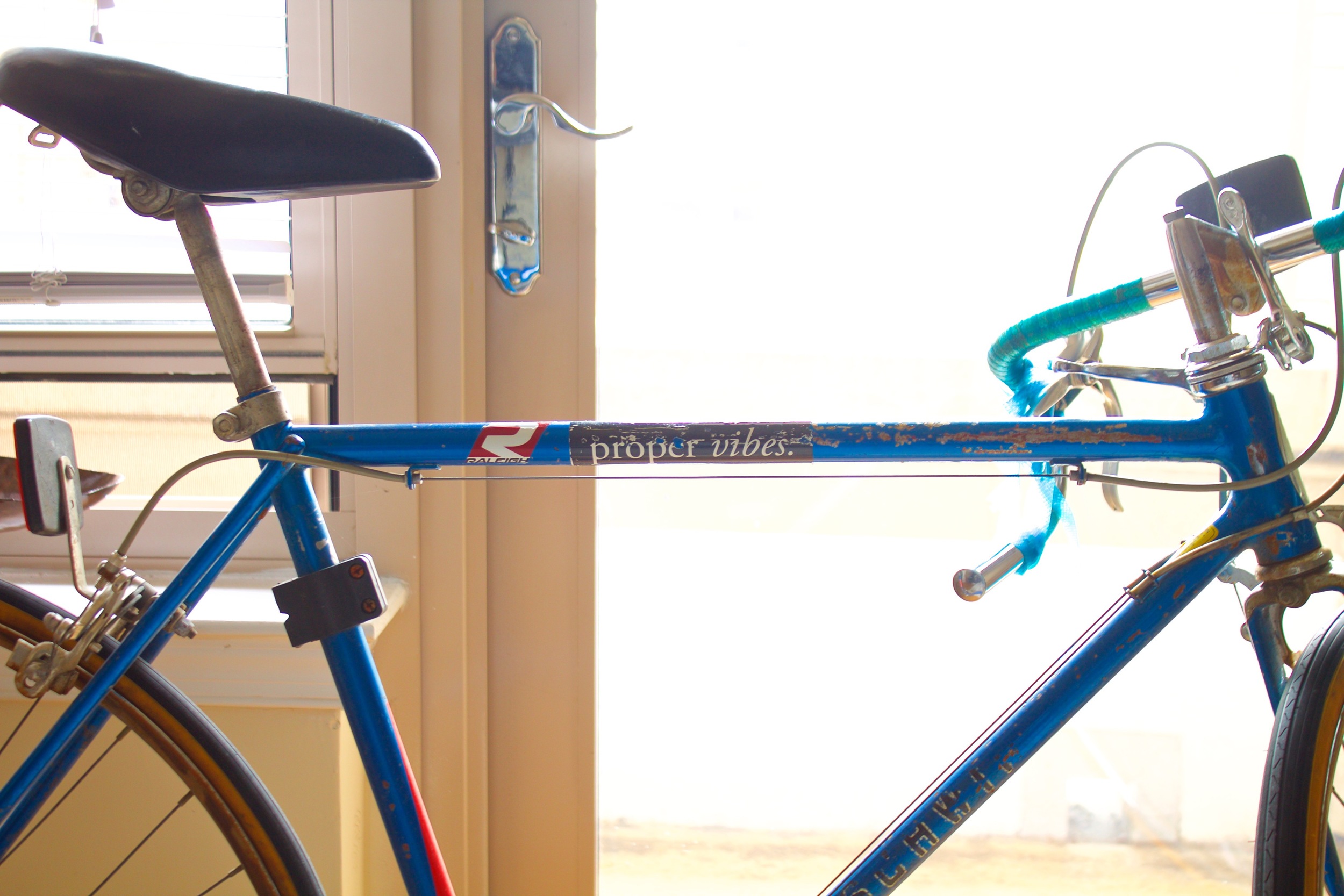
Today, we pick up the conversation with Cautious Clay regarding his involvement with a young, DC record label, Proper Vibes. The traditional framework of the music industry where an artist is signed under a record label has limited artists' ability to control his/her sound and act.  Before the disruption of the internet and music streaming services, like Napster, Spotify, and SoundCloud, artists had to rely on the financing and connections of major labels to distribute their music.  As a result, artists have had to relinquish some of their artistic freedom to acquiesce to the more popular or mainstream sounds those labels try to capitalize on; however, what we've seen over the past several years is a shift in control.  Artists of all popularity have begun to cut out the intermediary record labels to start their own independent entities to distribute their art.  Not only have large independent labels, like Jay Z's Roc Nation or Top Daw Entertainment, risen to prominence, but the accessibility and innovation of the worldwide web has enabled emerging artists to form their own collectives to promote their music.  No longer is it necessary to have support from bureaucratic executives looking to take advantage of musicians, all it takes is a click of a button to make your content accessible to everyone. 


MY: You opened up for Lido right?

JK: No, no that was Keylow.  He actually lives in this building, too.  He’s a chill dude.  He runs Musx, which is a promotional company.  It’s a music app, it has a pretty big influence.  They just did a showcase with Moving Castle, which was pretty cool.

AY: It’s funny that you mentioned that.  I think in the EDM community there’s a culture of doing things on your own.  Honestly, you guys are pushing your art and product on your own.  You have Proper Vibes and this app you just mentioned, it seems like there is this big underground community of people doing things on their own.

JK: Yea, for real.  I mean really that’s the way it is.  It’s so funny because even only being a producer for a year and a half, I feel like I’ve seen the gamut of just the major leagues to doing your own thing to being an instrumentalists and not even knowing how to produce, like I’ve seen this all since my freshman year of college and it’s just been crazy.  I feel so fortunate to be at the position I’m at right now because I’ve worked with people who work at Warner, you know, but at the same time I wasn’t producing at the time.  And then you have these people who are not even linked to that who are just making it on their own and their just doing it.  They organize their own bookings, their own shows, their own publishing; everything is just them and it’s just crazy to me.  It sounds novel, but I think it’s really cool to think about.

MY: Touching on that, what has it been like working with Proper Vibes?

JK: I help organize some of the events with Proper Vibes, but Proper Vibes is nothing but family, they’re great guys.  They have just been a platform for me to have a community that can work around each other.  We kind of work together and make our own stuff.  We started off in very much a similar way, I’d say, like Moving Castle.  It’s just a really cool community for us to throw shows and events.  I mean, we are a record label, too, but I’d say we are more so kind of an events entity right now.

AY: How receptive has the community been towards your events?  Are you getting nice turnouts and growing a fan base as well?

JK:  Oh yea, we are definitely growing a fan base.  We’re going in a positive direction, which I think is great.  I think there have been some logistical issues over the past year that we’re working out, but it has been nothing but positive.